Journal & reminders
The longer thoughts.
A check-in says how today went. A journal says what it meant — asked for with a prompt when there is something worth reflecting on, and kept or shared as you choose. Beside it, reminders written in your own words.
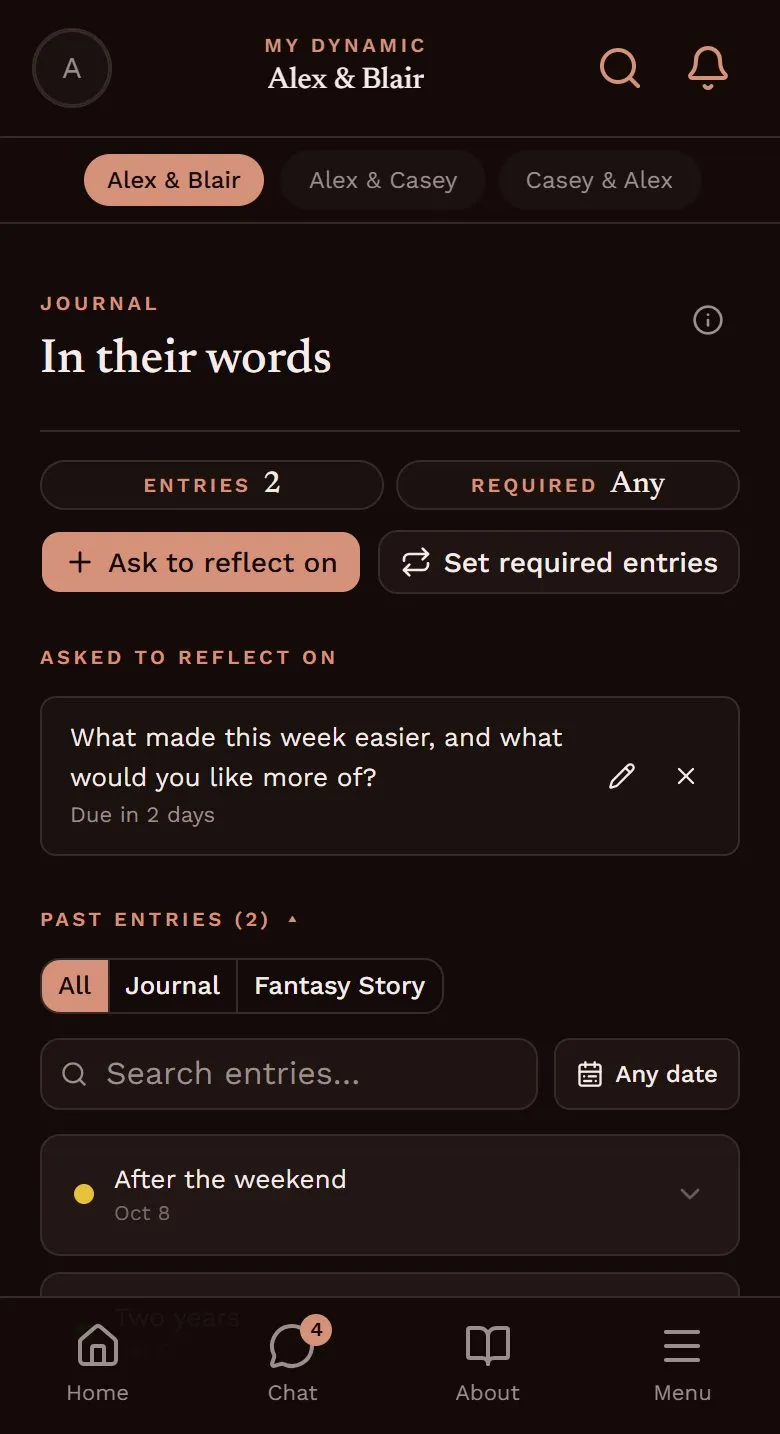
You ask for reflections and read what's shared.
Free. The reminders described here are on the paid plan. See pricing
Journals, and the prompts that start them
A journal is longer and less structured, and it can be asked for — a prompt to reflect on something specific, which arrives as a notification and files under a heading of its own until it is answered. A cadence can be set too: so many a day, or so many a week, with what is outstanding on the home screen rather than left to be discovered.
Entries can be shared or kept back. What is shared is read and can be responded to; what is not, is not. Neither of you can rewrite the other’s.
A prompt is a question somebody cared enough to ask. The answer is yours.
Prompts work best when they are specific: what made yesterday easier, what you would like more of, what you have not found a way to say out loud. A good one gets an honest paragraph back; a vague one gets a line. And because the journal stays open during a pause, it is one of the places somebody can still be heard when everything else has stopped.
Reminders in your own words
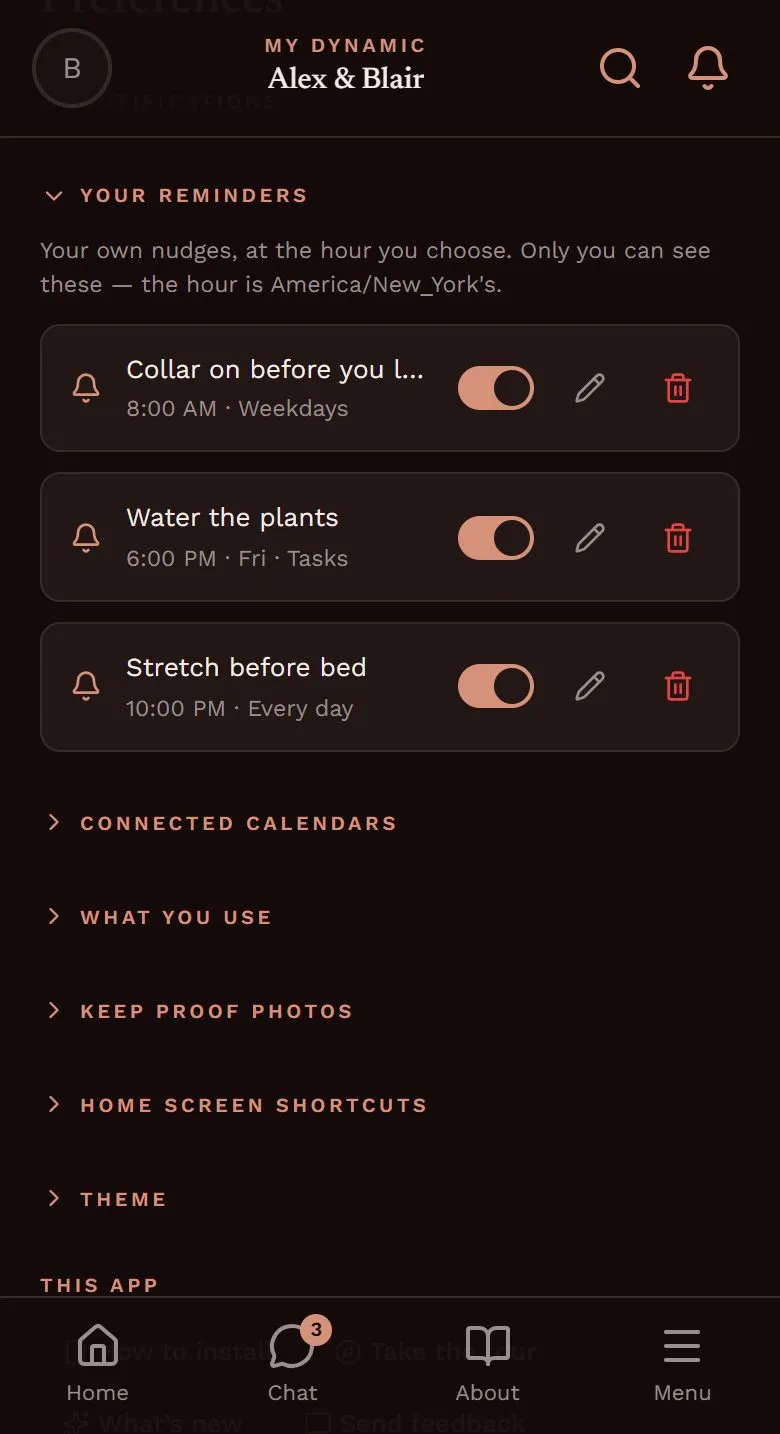
The app used to nudge about chores at an hour you picked, and it does not any more — those were the best it could do while it was the only thing that could decide when to speak. Instead you write your own: a line of your wording, an hour, and the days it applies on. Collar on before you leave, 8am, weekdays.
Nobody but you can read these, your Dominant included. A nudge you set yourself is not part of the record the way a rule or a ruling is, and a private note-to-self that somebody else reads stops being one.